Llanelli Naturalists Newsletter - Summer 1989
Richard Pryce
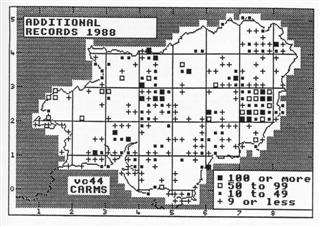
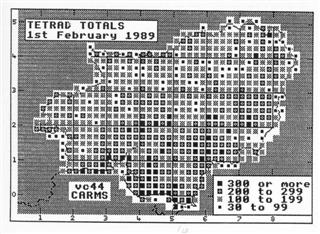
1988 was probably the most successful year of recording for the flora to date. Particular attention was again paid to the monitoring scheme squares but not exclusively so. A total of no less than 223 cards (mostly RP17s) were completed for these squares in the two years. Several first-class sites were discovered in 1988 together with 24 new vice-county records (ncr) fifteen of which were dandelions, one a new Welsh record, ten second vice-county records (2nd vcr) and two third vcrs!
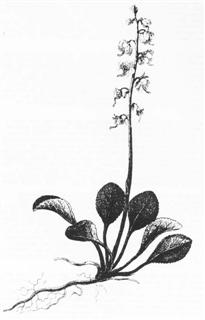 The first record I received for the year, in February, was from Denys Smith who reported a good colony of White Butterbur growing on a roadside bank near a farm at Dryslwyn (SN52) (ncr). The following month saw the discovery, by Nigel Stringer (RNS) and Richard Davies, whilst carrying out their comprehensive historical and ecological study of the limestone woodland near Carmel, of a small stand of Mezerion (2nd vcr) growing in the vicinity of Toothwort, Herb Paris and Lilly of the Valley (SN61). Later in the year RNS, Ian Morgan (IKM) and RDP made the first post 1970 record of the grass Poa compressa on railway ballast at Llwynhendy (SS59).
The B.S.B.I. joint Pembs-Carms meeting in April was not only a memorable social occasion but also produced some interesting records from the largely wooded Eastern Cleddau valley (SN12) (RDP & George Hutchinson (GH)). The characteristic valley-mire species here appears to be Yellow Flag, whether because it is naturally more abundant in the district or whether it is merely unpalatable to the rather concentrated cattle population, I am not certain. More acid wetland nearby supported small quantities of Ivy-leaved Bellflower and Bog St. John's Wort. One fine, riverside heath had a large area dominated by Bog Myrtle, a species also seen sporadically elsewhere in the locality, whilst flushed oak-ash woodland frequently contained Water Avens in the ground layer.
The volatile political situation pertaining to the Pembrey Saltings area gave extra encouragement to recording SS49 for the monitoring scheme and in early May, Frank Webb and RDP noted several new plants for the site. These included the grass Avenula pubescens on the grey-dunes and an interesting assemblage growing along the Cefn Sidan strand line consisting of hemlock Water-dropwort, Sycamore, Osier, Rosa rugosa and cultivars of iris and broom! Later in the year a brief visit was made to check on the continuing presence of notable species such as Striated Catchfly, Fragrant Evening Primrose and Rock Sea-lavender. Also, a very pleasant voyage was made (RDP) in August in an attempt to re-find eel-grass offshore, last seen in the 1930s, but unfortunately it was to be in vain.
Another pleasant monitoring scheme 'chore' was to check on the population of Upright Chickweed near Llangadog (RDP), which largely due to the protection of the farm's owner was found to be doing well together with its associates including Parsley-piert, Bird's foot, English Stonecrop, Sheep's Sorrel, Field Speedwell and the grasses Poa subcaerulea, Aira praecox and Briza media. Nearby in the Bran valley, Alternate-leaved Golden Saxifrage, last recorded in 1979, was not refound but a new and extensive population of Meadow Saxifrage was discovered. Alternate-leaved Golden Saxifrage was, however, re-recorded for SN72 near Craig ddu, Myddfai.
A high-powered team which included Peter Jones (currently researching a Ph.D. into duneland ecology with particular reference to Fen Orchid), John Etherington (U.C.W. Cardiff), Vicky Morgan and Brian 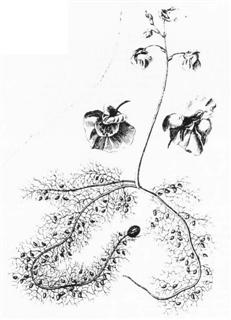 Pawson (both N.C.C.) and RDP, visited Tywyn Burrows (SN30) in late June with a view to ascertaining why Fen Orchid has become extinct at the site within the last twenty years. The opinions expressed were that the habitat has become unsuitable due to hydrological changes and lack of grazing, resulting in the rank growth of Creeping Willow repens and mosses such as Calliergon cuspidatum which have smothered the orchid out: really a case of natural succession as the dune system becomes more mature with time. Three weeks later members of the same team visited the dune system at Laugharne Burrows (SN20 & SN30) and Peter's expert eye was enough to pick-out a likely-looking habitat at 'a hundred paces'. The Land Rover was stopped, the crew piled-out and within thirty seconds a major new colony of Fen Orchid had been discovered: perhaps a hundred plants - for me the highlight of the year! Several quadrats were recorded and further measurements made during a second visit in August. The opportunity was also taken to monitor the populations of Dune Gentian (Laugharne and Tywyn), Frog Orchid (Laugharne) and the sedge Carex punctata (Tywyn).
Re-recording of a Greater Butterfly Orchid site (an S.S.S.I.) north of Nantgeredig in SN42 for the Monitoring Scheme was done in early July (RDP). 47 plants in flower were seen as well as an abundance of Common Spotted Orchid but the site was suffering from the effects of too light a grazing regime which has allowed severe encroachment of bracken, bramble and willow scrub. However, a single plant of Whorled Caraway was also seen together with one Early Marsh Orchid but it is likely that all the choicer species will be smothered out unless more effective management is achieved.
My first visit to SN75 was made on 3rd July with Arthur Chater (AOC), Adrian Fowles and Dave Boyce. The approach was made from Llanddewi Brefi with AOC recording the Cards species but we only crossed the boundary into Carms, after several miles of trekking in torrential, uncompromising rain. It was well worth the discomfort, a very rich upland mire at the head of the Pysgotwyr yielded Marsh Cinqufoil, Common Butterwort, Bogbean, the sedges Carex curta, C. rostrata and C. paniculata, but most notably, Lesser Bladderwort, the 3rd post 1970 vcr. A northfacing slope of Esgair Gaeo had a few plants of Mountain Pansy, both yellow and purple flowered forms - the first occasion that I personally had seen the species in vc44. The view was one of complete, undisturbed isolation until we found pegs marking out a very large area of proposed forestry planting. The bent grass Agrostis vineale continues to turn up in suitable 'dry' upland habitat, eg near the Mountain Pansy mentioned above and near Rhandirmwyn (SN74) (Robin Walls (RW)).
James and Mary Iliff's contribution to the Monitoring Scheme, principally from SN72, was considerable and included two sites for the spike-rush Eleocharis quinquiflora (and others in SN73 & SN74) and many rich habitats supporting such species as Petty Whin, Saw-wort, the grass Briza media and the sedge Carex hostiana. In addition to this an early season visit to the Merchon valley (SN74) on which they were accompanied by RDP was rewarded with the 3rd vcr of the Maidenhair Spleenwort Asplenium trichomanes subsp. trichomanes from an old quarry in acid shales and flags.
A minor expedition to Carreg yr Ogof (SN72) by participants of the Cares. Flora Recording Weekend in August included RW, John Killick, Dave Winsall, GH and RDP. Most of the species previously known from this small area of limestone pavement were refound for the Monitoring Scheme including Northern Bedstraw, Mossy Saxifrage, Lesser Meadow-rue, Green Spleenwort and the grass Koeleria gracilis but Limestone Fern, Mountain Everlasting and the sedge Carex montana were not seen.
Sheila Gouch carried out a vegetation survey of the Brecon Beacons National Park and her discoveries included an extremely fine grassland site near Talsarn, Llanddeusant (SN72) which had Globeflower, Upright Vetch, Dyer's Greenweed, Fragrant Orchid, Meadow Thistle, Greater Butterfly Orchid, the sedge Carex pallescens and the inter-generic hybrid grass xFestulolfua loliaceum. She also recorded the grass Gaudinia fragilis (2nd vcr and 1st since 1967) with Whorled Caraway, Meadow Thistle and Greater Burnet growing near Nant-gwineu, Garnant adjacent to a prospective opencast site (SN61). Kathy Groves, recording areas of restored opencast land, found the mayweed Matricaria recutita to be fairly frequent, particularly in gateways, near Penygroes (SN51) and Llandybie (SN61) and a plant of the sedge Carex otrubae in a restored ditch (SN51).
Richard Jones' vegetation survey of National Trust land at Dynefwr Castle, Deer Park and Ox Bows (SN62) was very rewarding. Notable species included Adder's Tongue Fern, Nettle-leaved Bellflower, Alternate-leaved Golden Saxifrage, Herb Paris, the greater bladderwort Utricularia neglecta and the sedges Carex divulsa, C. acutiformis, and C. vesicaria.
Trevor Crosby (TSC) discovered what must be the furthest west extant Welsh site for Alternate-leaved Golden Saxifrage near Crwbin, in wetland on Old Red Sandstone (SN41). Also growing in the vicinity were Green Hellebore, Early Dog Violet, Sweet Violet and Southernwood (ncr, persisting in the wall of a derelict garden). TSC also recorded Musk from river shingle at Glanranell (SN63).
In addition to his dandelion records below, GH's 1988 ncrs included the grape hyacinth Muscari armeniacum (SN41, escape), the dock Rumex crispus var. uliginosus (Carmarthen, SN41, det. J. R. Akeroyd), and the archangel Galeobdolon argenteum (several sites) but he also discovered many rich and interesting sites widespread throughout the vc.
The barley Hordeum jubatum was a ncr made by consultants engaged by the C.E.G.B. to carry out a vegetation survey of the Carmarthen Bay Power Station site at Burry Port (SN40) (Rupert Higgins 6, D. Lawrence). They also recorded the club-rushes Lsolepis cernua and I. setacea, Brackish Water Crowfoot and Prostrate Toadflax (in a new site which was also recorded by Phillip Jones).
A ncr made by IKM in 1987 and later confirmed by GH (NMW) was of the toad rush Juncus ambiguus from Commissioner's Marsh, Kidwelly (SN40). He also discovered Lanceolate Spleenwort growing at Ragwen Point, Pendine (SN20), the 2nd extant vcr which is presumed to be a rediscovery of Knight's 1907 record from 'near Pendine'. A spin-off from his current primary activity of invertebrate recording was IKM's reporting of several very fine 'new' sites which included valley woodland near Glyn Abbey (SN40) with Hay-scented Buckler Fern; unimproved upland pastures at Cefn Blaenau (SN54) near the Cards. border with Whorled Caraway, Common Butterwort and Ivy-leaved Bellflower; an acid mire on the Millstone Grit at Castell y Rhyngyll (SN51) with Lesser Butterfly Orchid, White Beak-sedge, the spike-rush Eleocharis multicaulis and Meadow Thistle; unimproved pastures at Cefn Llech Clawdd (SN33) with Whorled Caraway, Saw-wort, Lesser Butterfly Orchid and the grass Briza media; and Nantgeredig (SN51( with Whorled Caraway, Saw-wort, Cranberry, Marsh Cinqufoil and the sedge Carex pallescens and a roadside verge north of Ammanford (SN61) having a major colony of Dutch Rush, the 3rd vcr. IKM also made a new 10km square record of Sharp-leaved Fluellen in a disturbed pasture above Stradey Woods (SN40) which also later turned up in the same square: in the vc recorder's strawberry patch!
Annie Mary Pell (AMP), whilst concentrating on railway sites, this year made several records of the hybrid bluebell Hyacinthoides non-scripta x hispanica (conf. NMW) including 1st and 2nd vcrs from her more usual burial-ground habitat in Capel Hendre (SN51)! She also had a ncr of the stonecrop Sedum dasyphyllus from the same site.
The first post 1970 record of Dwarf Mallow was made at Llansteffan (SN31) by Leonard Sealy-Lewis shortly before his so untimely death. The county has lost a man of considerable experience, not only in floral and faunal recording but also in all aspects of nature conservation. His absence will be sorely felt.
Three new probably native sites for Soloman's Seal were communicated by Brian Reely in SN22 and SN23 and Dr. Elspeth Grey provided a comprehensive run-down of Cornish Moneywort colonies in the Brechfa area (SN52 & SN53) including one new site.
Critical species were not neglected: Fifteen of the ncrs were microspecies of dandelion collected by AMP, GH or RDP, namely T. 'anceps', T. 'British atactum', T. berthae, T. boekmanii, T. bracteatum, T. cambricum, T. dahlstedtii, T.ekaani, T. insigne, T. laeticolor, T. lamprophyllum, T. lingulatum, T. lunare (first Welsh record), T. marklundii and T. pannulatua. There were also 2nd vcrs of T. bracteatum, T. dahlstedtii, T. ekmani, T. excellens, T. hamatiforme, T. lingulatum, T. oblongatum, T. pseudohamatum, T. quadrans, and T. sellandii. My thanks to Chris Howarth for determining the specimens. Chris Frazer-Jenkins determined or confirmed Buckler Fern (Dryopteris) material recently collected and held at NMW. Amongst the specimens was a ncr from near Llandyssul (SN44) of D. x complexa nothosubsp. complexa being the hybrid between D. affinis subsp. affinis and D. filix-mas (GH). Jim Bevan's annual Carms hawkweed (Hieracium) foray saw a whistle-stop tour of many of the old limestone quarries between Mynydd-y-Garreg and Llandybie and up to the Black Mountain. Sites for H. subamplifolium were increased from one (recorded pre 1970) to nine which included three new 10km squares. He also visited Craig ddu, Myddfai and collected material for later confirmation.
My thanks to all recorders, referees and mentors. The 1989 season is already well underway and it would appear that quality and quantity of records remains very high!
 |
 |
References
Ellis, R.G. (1983). Flowering Plants of Wales. Cardiff.
Pryce, R.D. (1988a). Further botanical Highlights. Llanelli Nats. Newsl. Summer 1988.
Pryce, R.D. (1988b). Pembrey Forest and Tywyn Burrows. ibid.
Pryce, R.D. (1988c). Bishop's Pond, Abergwili, Carmarthen. ibid.
