Llanelli Naturalists Newsletter - October 2002 - No 6
Richard Pryce
Introduction
I have again received (and am trying to deal with) so many records that this report is necessarily a selection of those which appear to me to be the more interesting. Any omissions are likely to be due to the fact that I am unable to keep my filing system as up to date as I would like but I have asked Dr George Hutchinson (GH) and Ian Morgan (IKM) to read drafts of the text and I hope that they will have pointed out any glaring omissions or errors.
Three field seasons are covered by this report (1998, 1999 & 2000) which brings the state of botanical recording in Carmarthenshire right up to date. During this period I was able to produce, at the request of CCW and Carmarthenshire County Council, the Carmarthenshire Rare Plant Register, a document which records the present state of rare and scarce vascular plants in the county. It includes all protected, nationally rare and scarce species as well as county rarities (broadly those recorded in three or fewer sites) and a selection of scarce and characteristic species, and is intended, among other uses, as a tool to assist in the drafting of the county’s Local Biodiversity Action Plan and to allow easier access to records of important plant populations for applications such as Development Control. It has also proved to be an invaluable tool and stimulus to revisit sites of rare species in order to monitor their current status. The document will be continually updated and new printings will be made available from time to time.
As always, I am grateful to all observers who have forwarded records and in particular those who participated in the annual recording weekends held in 1998 and 1999 at Llwyn-Celyn, Llandovery and in 2000 at Glynhir Mansion, Llandybie. Also to all referees, and particularly to GH, for their continuing support.
Red Data and Schedule 8 Plants
Following the discovery of 59 flowering plants of Liparis loeselli (Fen Orchid) at the East 4 Range on MoD land at Laugharne Burrows in 1997, no plants were reported in 1998 or 1999. Participants in the annual Recording Meeting re-visited the site on 25/6/00 but after a lengthy search only a single, non-flowering plant was found (by Dr Christine Cheffings (ChC)). The Countryside Council for Wales, in conjunction with the MoD, are planning management work to increase the chances of the species’ survival and at the time of our visit, management plots had been marked out. It is hoped that the site may be returned to a more favourable status by scraping the top few cm of the surface in order to remove smothering vegetation and return the dune slacks to an earlier successional stage, as favoured by Liparis. Such action has been successful at Kenfig NNR in Glamorgan and it is hoped that similar management at Laugharne will be equally successful.
An extensive search of the short turf of the helipad on Tywyn Burrows during a Llanelli Naturalists field meeting on 25/9/99 (Hutchinson & Pryce, 2000) produced only six plants of Gentianella uliginosa (Dune Gentian) where hundreds had been two years before. It was suggested that a lapse in the mowing of the turf might be responsible. Neither Spiranthes spiralis (Autumn Lady’s Tresses), nor the rare liverwort Petalophyllum ralfsii (Petalwort) were rediscovered, despite both having been present in 1997, again probably for the same reason. An examination of the nearby edge of the saltmarsh revealed numerous large clumps of Juncus acutus (Sharp-rush), here near the spot where John Ray had recorded the species in 1662 – the first botanical record for the v.c.. Along the ‘Bee Orchid Ride’, a depression between ridges of stable dunes parallel to the beach which, although having escaped forestry planting, is infested with Hippophae rhamnoides (Sea Buckthorn) and self-sown Pinus nigra ssp. laricio (Corsican Pine), a particular effort was made to refind the Yucca recurvifolia (Curved-leaved Spanish-daggers) last seen at the foot of a dune in 1979. In the intervening twenty years the plant had grown from two rosettes about 0.3m high to many rosettes 2.7m tall with previous year’s flower spikes to almost 4m. Two spikes were also just coming into flower. Occasional plants of this species have become established over the years on the rear-faces of Marram-dunes close to the beach between Pembrey Burrows and Tywyn Point and are thought to have originated as drifted seeds or vegetative fragments from the American east coast (it is a native of the Carolinas) although this hypothesis is not accepted by the drift-seed expert, Charles Nelson (pers. comm.). As long ago as 1839, this mechanism was suggested by L W Dillwyn of Penllergare, Swansea, (Dillwyn, 1848) who described "a thriving young plant ... was found [at Crymlyn Burrows, Swansea] more than a mile from any house or garden ... and it had all the appearance of having arisen from a seed which the tide had cast there". Recent erosion of the seaward dune faces of Tywyn Burrows has destroyed some of the Carmarthenshire plants, a process which is likely to continue with present coastal erosional trends.
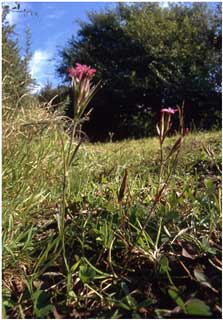 The Carmarthenshire population of Dianthus armeria (Deptford Pink) at Bryndias, Pinged (SN434034) was visited on 23/5/98 by RDP when 22 plants were counted, not yet in flower. More plants were counted, now in bloom and more conspicuous, when Phil Wilson visited a few weeks later, whilst monitoring all the British sites. However the population was thought to have been dealt a fatal blow in 1999 when the trackway along which it grows, was widened and made passable to cars. The property had changed hands and the new owners had not been made aware of its presence. They were distraught to discover what consequences their action may have had. However, Plantlife’s National Biodiversity Action Plan for the species, received in early October 2000, reports the site to again be in good condition, with 58 flowering plants and a further 24 seedling rosettes having been recorded in 2000 !
The fourth v.c. record (and new 10km square) of Trichomanes speciosum (Killarney Fern) (gametophyte) was found by Arthur Chater (AOC) under rock overhangs on a dry, acid, steep east-facing slope under Quercus petraea (Sessile Oak) woodland, 200m north-east of Pencastell, near Llanwinio (SN2584.2910).
The Veronica spicata ssp. hybrida (Spiked Speedwell) population on the limestone cliffs below Carreg Cennen Castle (SN667190) was visited on several occasions by various monitors during the three-year period and continues to flourish.
New Native V.C. Records and rediscoveries of Historical Records
Based in Gower, Tony and Viv Lewis (T&VL) have achieved a considerable amount of recording and monitoring over the past three years, bringing fresh eyes to already well-worked areas of the county. One of their most important discoveries was Silene nutans (Nottingham Catchfly), a species new to Carmarthenshire. They discovered about 35 well established plants on 1/5/99 growing on Penrhyngwyn, the small remnant of natural coastal shingle at Machynys, Llanelli (SS514973). This population must have been overlooked by several local recorders as the site has been well botanised in the past. It is suspected that it may have been passed over as weather-beaten S. latifolia (White Campion) at this exposed site or have been grazed down by rabbits, as it was later in 2000!
 Many plants of Spirodela polyrhiza (Greater Duckweed) were seen in one of the northern ditches at the Wildfowl and Wetlands Trust centre at Penclacwydd, east of Llanelli (c.SS537987) during a Llanelli Naturalists field meeting on 1/8/99. This species had not been recorded in Carmarthenshire since James Motley’s record of c.1850, presumably from a site in the Llanelli area. A solitary plant of Lemna gibba (Gibbous Duckweed) was also pulled out of the ditch by IKM. It was classically obese and clear-cut L. gibba; no others were found in spite of specific searches, though Barry Stewart (BS) had noted true L. gibba elsewhere at Penclacwydd several years previously. IKM revisited the same ditch in early October 2000 but was unable to refind any Spirodela though it was common in another part of the same ditch. He suspects that there is an ‘ebb and flow’ of these surface aquatics, perhaps reflecting changes in water chemistry, temperature and interactive competition. For example, the Lemna trisulca (Ivy-leaved Duckweed) at Machynys Ponds and related ditches has fluctuated dramatically in recent years. Lemna trisulca, incidentally was reported from a new site by IKM on 13/8/00 when he recorded it growing abundantly along 150m of the Pembrey Canal (SN436009) intermixed with L. minor (Common Duckweed), and L. minuta (Least Duckweed).
Another re-discovery was that of Descurainia sophia (Flixweed), found by IKM on 1/7/00. Having acquired comprehensive instructions from IKM on how to relocate the plants, on 5/7/00, RDP & Kath Cottingham (KAC) carried out an extensive but abortive search of about 1km of trackway (during which about 500 Marbled White butterflies were admired), when, just about to give up, 10 or 11 Descurainia plants were found just where the car had been parked! They covered an area of about 10m x 1m on the edge of the cinder-surfaced track at the north-western corner of Pembrey Burrows and Saltings Local Nature Reserve (SN417002) and were growing in association with about 50 plants of Erysimum cheiranthoides (Treacle Mustard). This is the second v.c. record for Descurainia and the first since Motley’s unlocalized record of c.1850, and the sixth v.c. record of E. cheiranthoides.
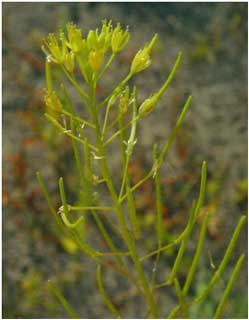 M V Prosser and H L Wallace (MVP&HLW) discovered Radiola linoides (Allseed) on the accreting ‘nose’ at the eastern end of Pembrey Burrows (SS433993) in 1998 during a survey of Carmarthenshire saltmarshes which they were undertaking for CCW (Prosser & Wallace, 1999). Radiola was growing in a dune hollow which “might usually be expected to support dune slack vegetation” and was associated with Sedum acre (Biting Stonecrop), Euphorbia paralias (Sea Spurge) and Inula crithmoides (Golden Samphire) within more typical NV.C. SM24 community species including Elytrigia atherica (Sea Couch), Festuca rubra (Red Fescue), Agrostis stolonifera (Creeping Bent) and Limonium binervosum (Rock Sea-lavender). Radiola has not been recorded in the county since about 1950 when J F Thomas noted it growing on Laugharne Burrows in damp hollows in dunes (SN30?). MVP&HLW also found Eleocharis uniglumis at Morfa Uchaf, Ferryside (SN373126) during the same commission, a new species record for the 10km square.
Within the recently declared Cernydd Carmel NNR, Persicaria × intercedens, the hybrid between P. maculosa (Redshank) and P. hydropiper (Water-pepper), growing with both parents, was identified at the side of a field-pond at Garn Farm, Carmel (SN591159) by members of the BSBI Welsh AGM on 22/8/99. Earlier at the same meeting, Juncus × kern-reichgeltii, the hybrid between Juncus effusus (Soft Rush) and J. conglomeratus (Conglomerated Rush), displaying its characteristic yellowish colour, was pointed-out by AOC on the southern slope into Pwll Edrychiad (SN585160). Both hybrids were first vice-county records. The second record of J. × kern-reichgeltii was made by AOC, GH, RDP & KAC in the rushy fields between Pembrey Forest and Penybedd Wood, Pembrey (SN408013) on 26/6/00.
Euphrasia confusa x E. nemorosa from the E6 Range (SN320074) on Laugharne Burrows, collected by RDP (16/8/97) was determined by GH (2/99) from material at NMW and proved to be the third v.c. record. More of GH’s Euphrasia determinations are noted below.
IKM sent a negative record which may be of interest. In late July 1999 he visited the narrow, wooded dingle behind Ystradffin Farm (SN789465), in the extreme north-east of the county. He was following-up an old record of Circaea alpina (Alpine Enchanter’s-nightshade) made by the noted bryologist, H H Knight (1862 – 1944), a master at Llandovery College until 1907 and reported in Barker (1905). Knight had recorded both C. alpina and the hybrid C. x intermedia (the latter being still frequent in the Rhandirmwyn area) and it was this fact, together with very recent records of C. alpina from the same upland massif in south-east Ceredigion, which made a Carms search for the species plausible. But in spite of careful examination of suitable part-shaded, slightly base-enriched, damp gully habitat the search proved fruitless, although C. lutetiana (Enchanter’s Nightshade) was seen and the discovery of Phegopteris connectilis (Beech Fern) was partial compensation. IKM still considers C. alpina to be a species which is still likely to occur in the area, but poses a challenge to agile botanists! Another species which may also occur in similar habitats and one which has not been seen for many years in the county is Stellaria nemorum (Wood Stitchwort). It was recorded from ‘near Llandovery’, again by Knight, and most recently, in 1953, by Mrs M Barnes and R F May from ‘near Taliaris’. Another challenge perhaps!
Nationally Scarce Plants
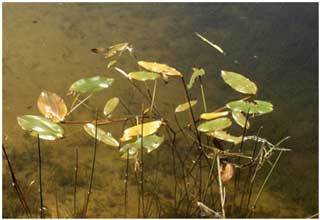 The small population of Silene gallica (Small-flowered Catchfly) discovered at Burry Port on the apron above the northern wall of the Western Inner Harbour (SN444006) in 1997, was searched for by Richard Pryce (RDP) on 7/4/98, but no plants were found. However at least 1000 plants, ranging from c.2cm to c.15cm tall, were found in full-flower at the site only a few weeks later, on 23/5/98. All were in seed three weeks later. The single tiny desiccated plant found at the site on 29/6/99 by AOC during the BSBI Welsh AGM field meeting was thought to be a leftover from the previous season and was the only plant seen during the year. However, 2000 produced about a dozen well-grown and photogenic plants, up to c.30cm high, which produced the best show of flowers seen since the species’ rediscovery three years ago.
The second v.c. record of Potamogeton coloratus (Fen Pondweed) was made by IKM at the ‘Starfish Pond’ in Pembrey Forest (SN391015) on 20/4/98 and was subsequently confirmed by Nick Stewart.
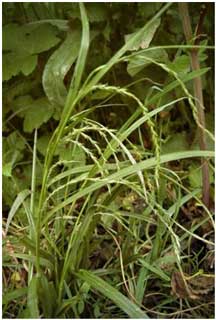
Charophyte records were made by Richard Lansdown (RVHL) and RDP in Pembrey Forest and the RAF Bombing Range, Tywyn Burrows, on 22/3/1998. Tolypella glomerata (previously recorded from the RAF Range by IKM in 1986) was frequent in flooded ruts and tracks at SN376033, SN376035, SN373044, SN366044, SN364050 and SN365049. Chara aspera was also abundant in the pool by the targets (SN364050). Two other species were collected which await confirmation. T. glomerata was also found to be locally abundant in some well maintained but shallow ditches north of the C9 track at the MoD Establishment on Pendine Burrows when RVHL and RDP visited the site with John Rees on 29/3/98 (SN280073). At one point, near where the access road crosses the ditch, Chara vulgaris var. vulgaris, C. vulgaris var. longibractiata, C. curta and C. virgata were all growing in close proximity.
County Rare and Scarce Species
David Pearman, past president of the BSBI, visited the county on 26/2/99, anxious to assist in refinding the old Carex strigosa (Thin-spiked Wood-sedge) population at Alltywern Wood, Llangathen (SN579217). Accompanied by RDP & KAC, several plants were duly found, displaying the characteristic asymmetrical ligule (best developed in winter) growing on the banks of a single tufa-depositing stream, in light shade. Furthermore, the other small population discovered in a road-verge north of Cilsan Bridge (SN589217) by Robin Walls and John Killick (HJK) ten years earlier was re-found. RDP & KAC revisited the site on 13/5/99 when the plants were found in full flower. A new record of Polypodium x mantoniae (a hybrid Polypody) was also made at Allt-y-Wern during David’s visit which was confirmed by GH on 9/6/99.
T&VL drew attention to the relative abundance of Geranium rotundifolium (Round-leaved Crane’s-bill) at Burry Port Harbour (SN443006) in 1998 (near the Silene gallica site), extending the local range of the species from GH’s record from the site dating from 14/6/92. This is the sole extant population in the v.c. as far as is known, and extends for the whole distance of the old dock wall in addition to occasional plants growing on the road bank to the north, discovered by RDP on 22/5/00.
The visit to the West Pwll Fly-ash Lagoon (SN472010) by BSBI members attending the Welsh AGM on 21/8/99 (Pryce, 1999a) enabled it to be scrutinised by over forty of the country’s most eminent botanists all of whom expressed their delight and sense of privilege at being introduced to such a unique site . Not surprisingly several new and outstanding findings were made. Several hundred tiny plants of the acidophobic Centaurium pulchellum (Lesser Centaury) were discovered in one spot. This species is known from the dune systems of Tywyn and Laugharne Burrows where characteristically it grows in rabbit-grazed dune slacks and formerly in a few rides in Pembrey Forest. It has not, however, been seen in the county since 1991, even at its previously known sites. The wildlife interest of the lagoon has been known for some years with records of Osmunda regalis (Royal Fern), several pairs of Lapwings breeding in the vicinity in the past and large numbers of Snipe feeding in winter. It is only in the last three years, however, that sustained and regular botanical monitoring has been carried out. The chemistry of the ash is such that after leaching for a few years it is able to support plant species which in natural habitats are often confined to highly acid or highly alkaline conditions. Thus, normally acidophile species such as Osmunda regalis, Oreopteris limbosperma (Lemon-scented Fern), Drosera rotundifolia (Common Sundew) and bog-mosses including Sphagnum fimbriatum and S. subnitens, grow in juxtaposition with acidophobes such as Juncus subnodulosus (Blunt-flowered Rush), Isolepis cernua (Slender Club-rush) and Dactylorhiza praetermissa (Southern Marsh-orchid). Another significant discovery was made by members of the Wildlife Trust West Wales who visited the site on 5/7/98: three plants of Pyrola minor (Common Wintergreen) were growing at the foot of the low fuel-ash cliff on the south-side of the lagoon. The species has not been seen since although searched for on several occasions.
Monitoring
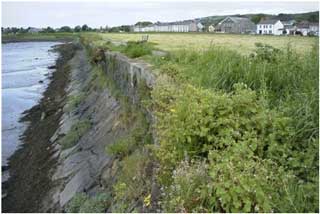 Hammarbya paludosa (Bog Orchid) was searched for at its only known v.c. site in the Twrch valley at SN768147 on 4/8/98 by IKM and Graham Motley (GSM) but no plants were found. However, a small population of at least 25 plants was discovered about 100m to the north-west growing in relatively bare ground, described by Ian as ‘organic ooze’ and not, as is characteristic, on moss tussocks (in the case of the original site, on Campylopus atrovirens). They also recorded Vaccinium vitis-idea (Cowberry) in block scree west of the river at SN771156, which was the 3rd v.c. record and first for the 10km square.
The inland record of Equisetum variegatum (Variegated Horsetail) from the filter beds below Llyn-y-fan Fach, which had been doubted by some experts in the past, was proved beyond doubt when, in 1997, Dick Davies (RHD) found a few m2 of the plant growing on the eastern bank of the Sawdde above the filter beds (SN801237). Further small colonies were found by Graham Motley (GSM) in 1998 and were also seen by AOC, GH, RDP & KAC on 19/6/99 (SN801237 and SN802235). Later in the same year, another inland site was discovered at Pant-y-Drefnewydd on Mynydd-du, by GSM and Sam Bosanquet who recorded a patch covering 2m x 1m in a wet area on limestone spoil on the floor of an old quarry at SN726193 on 4/11/99, a new 10 km square record. Further sites probably await discovery. IKM revisited the small Carmarthenshire populations of Rubus saxatilis (Stone Bramble) at Cwm Clydach, Mynydd-du (SN743189) (7/99) and Carex montana (Soft-leaved Sedge), Galium boreale (Northern Bedstraw) and Gymnocarpium robertianum (Limestone Fern) at Carreg-yr-Ogof (SN778217) (25/6/99) and found them all to be extant.
More mountain monitoring was undertaken by Dr Tim Rich (TGCR) and Tony Tipper (AT) of the National Museum and Gallery, Cardiff, who scaled the cliffs above Llyn-y-fan Fach on 5/8/99 in search of Hieracia (hawkweeds). They refound H. euprepes, H. orimeles and the spotted-leaved H. hypochaeroides as well as a glaucous leaved sect. Vulgata plant within the SN7921 grid square and H. orimeles, H. cf. substrigosum, two sect. Vulgata and a sect. Tridentata plants in grid square SN8021. They recorded several additional species most of which had also been seen recently at the site by other observers including AOC, GH, RDP & KAC on 19/6/99, and GSM, Jonathan Graham (JG) and Julian Woodman (JW) in May 1997. Species included Galium boreale (SN797217), Huperzia selago (Fir Clubmoss) (SN7921 & SN8021), Sedum forsteranum (Rock Stonecrop) (SN7921) and Vaccinium vitis-idea (SN7921). Several plants of Galium boreale were also seen in SN8021 between SN800215 and SN816217 by GSM, JG & JW. TGCR & AT also refound Nitella flexilis (a stonewort) in the lake (SN8021) and Callitriche hamulata (Intermediate Water-starwort) on mud and stones in a flush at the north end of the cliffs (SN7921).
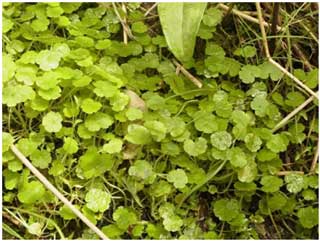 Clubmoss monitoring continued to be carried-out by James and Mary Iliff (J&MI). They visited the relatively large Diphasiastrum alpinum (Alpine Clubmoss) and Lycopodium clavatum (Stag’s-horn Clubmoss) populations north-east of Craig Llech-gwynt in the Gwenlais valley (c.SN730427) on 18/6/00. Their very comprehensive report (an education to us all in how to complete a rare-species population form) maps the populations and concludes that they have remained more-or-less stable since at least c1968 and that the site’s future is reasonably favourable. They also visited the clubmoss population at Crybin Du in the Pysgotwr valley on 19/6/99 but could find only four plants of Lycopodium clavatum at c.SN755488, and even more alarmingly, neither of the other species were seen. Another monitoring task undertaken by J&MI was to revisit the Vicia orobus (Wood Bitter-vetch) population west of Brynamman (SN700145), on 19/6/99. They again produced an admirably comprehensive report and sketch-map, recording about 50 plants with about ten under dwarf shrub which might be a future threat to the colony. A single V. orobus plant was discovered at a new site (also new for the 10km square) by ChC & MG on 20/6/99 on a lane bank near Llanllwni (SN490389) but they commented that there may have been more but the council had shorn the bank so short as to prevent recognition of further plants.
A new site was found for Sibthorpia europaea (Cornish Moneywort) by IKM & GSM at Cwm Hust, south of Llanybydder, on 1/4/99, where they found a patch of the plant c.1m2 on a west facing streamside bank in an area of felled conifers. IKM found another new site for the species west of Ceulannau Duon, Brechfa (SN493315): a c.0.5m x 0.5m patch on a steep, flushed, west-facing, rocky bank on 20/5/99. Both are first 10km square records. It is very likely that this species is overlooked in the northern half of the county, and without thorough examination of all small streams, rills and pistylls, it is suspected that many populations will remain undetected. One problem is the plant’s similarity with several others which grow in the same habitat (Chater & Pryce, 1999). AOC, GH & RDP were convinced that they had discovered Sibthorpia on the banks of the Afon Cennen, south-west of Trap on 20/6/99 (SN638183 to SN647188) but a small specimen taken and grown-on by RDP turned into, and flowered as, Chrysosplenium alternifolium (Alternate-leaved Golden-saxifrage), a species not recognised by the party in the field! This was also a new record for the Cennen, although previously recorded from the Loughor catchment less than 2km to the south (Coed Llandyfan SSSI, SN640169, R.G.Woods, 31/9/84 and the Loughor gorge at Glyn-hir, SN642152, R.N.Stringer & R.H.Davies, 1/5/84). It proved to be something of an embarrassment, however, particularly when RDP and KAC revisited the site on 25/3/00 and AOC and RDP on 27/6/00, all of whom were unable to find any convincing Sibthorpia plants, but instead, occasional patches of Chrysosplenium alternifolium. The subject remains unsolved but further visits are planned in 2001. All this overlooks the fact that the main reason for the 1999 visit was to monitor Saxifraga granulata (Meadow Saxifrage), which had not been seen on this part of the Cennen since 1979. Plants, many in seed, were found growing frequently on the river banks but other records of interest included a new site for Gymnocarpium dryopteris (Oak Fern) in woodland to the south of, and above the river, together with, on 25/3/00, a new site for Viola reichenbachiana (Early Dog-violet) near the chapel (SN636180) (KAC & RDP)
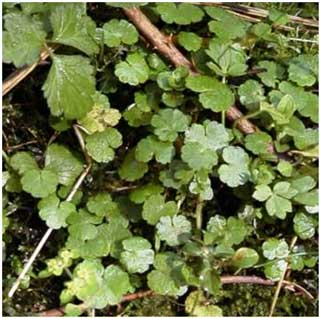 About 28 plants, one in flower and one in fruit of Andromeda polifolia (Bog Rosemary) were recorded by Wendy McCarthy (WMC) & Alice Saville when they were asked to monitor the population at Cors Goch SSSI, Llanllwch, west of Carmarthen (SN365188) on 14/6/98. The plants were re-found in the same area, north of the railway, as when they were last reported in the late 1970s. This part of the SSSI does not form part of the Wildlife Trust’s land-holding and is therefore the subject of few visits, but is the only area where Andromeda has been recorded.
Taliaris Pool (SN634283) was visited by AOC, GH & RDP on 14/6/98 in order to refind Potamogeton alpinus (Red Pondweed), last seen in about 1970 by Mrs Vaughan but the depth of the water and the inadequacy of the grapnel defeated the attempt. Even the conveniently placed resident dinghy had a hole in it! Another better equipped visit is obviously indicated in the future. However, Carex rostrata (Bottle Sedge) and Menyanthes trifoliata (Bogbean) were found to be abundant marginal species and AOC determined Callitriche hamulata (Intermediate Water-starwort) from the shallows.
Denys Smith has been monitoring Orchis mascula (Early Purple-orchid) at three roadside sites near Llandeilo since 1993, the results of which are reproduced below:
| Year | Pentrefelin | Side of A40, Penroc | Penybanc Farm | |||
|---|---|---|---|---|---|---|
| SN596239 | SN615235 | SN604235 | ||||
| 1993 | 21-Apr | 137 | ||||
| 1994 | 24-Apr | 127 | ||||
| 1995 | 30-Apr | 108 | 27-Apr | 120 | ||
| 1996 | 16-May | 45 | 14-May | 75 | 17-May | 61 |
| 1997 | 28-Apr | 73 | 01-May | 93 | 30-Apr | 48 |
| 1998 | 24-Apr | 143 | 27-Apr | 56 | 27-Apr | 102 |
| 1999 | 01-May | 105 | 02-May | 29 | 30-Apr | 79 |
| 2000 | 22-Apr | 115 | 23-Apr | 0 (site tipped-over) | 25-Apr | 52 |
Denys’ data shows the three colonies to fluctuate quite widely from year to year but generally they appear to be holding their own with the exception, of course, of Penroc in 2000, but he is hopeful that this population may recover in 2001.
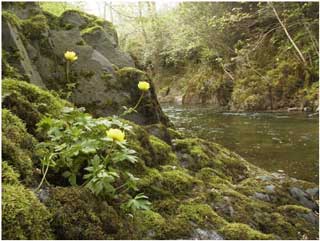 Trollius europaeus (Globeflower) continues to be of concern in the county. The population on a small rocky knoll in the Sawdde Gorge, east of Coed Shon (SN71922563), last seen by AOC, GH, Jim Bevan and RDP on 28/6/97, was refound by RDP and KAC on 22/5/99 and was found to cover an area of about 6m x 5m, comprising of about 40 plants. The previous year (14/5/98) RDP had walked a short length of the gorge south of Pont-ar-llechau in the hope of finding previously unrecorded populations but only discovered one: a single robust but compact clump, with about 20 flowers, on the east side of the river in a rocky and gravely area below Turkey Cottage (SN733237). J&MI rediscovered the small population known on a rocky island in the Afon Cothi west of Bwlch-y-Rhiw (SN717461) 20/6/99, but they found it to remain very vulnerable, consisting of just one flowering plant and one seedling.
J&MI refound the small population of Neottia nidus-avis (Bird’s-nest Orchid) growing in woodland by the Afon Tywi south of Cilycwm (SN754373) and brought a single flower to the annual Recording Meeting at Glynhir as evidence. The site was first reported by Ray Woods (RGW) in 1994. The small population of Coeloglossum viride (Frog Orchid) regularly found in recent years growing on a little-used trackway through damp dunes on Laugharne Burrows west of the MoD C9 prep room was searched for by the participants of the annual Recording Meeting on 25/6/00. No plants were found. The site appears to have become very much more overgrown since it was last monitored on 9/8/97 when six plants were seen. The continued colonisation of rank vegetation and encroaching scrub is a severe problem affecting the whole of Carmarthenshire’s dune systems, where rabbit grazing and past management practices have all but ceased. The introduction of cattle grazing has been proposed but this may not be appropriate for the well-being of some delicate species. The only other confirmed Carmarthenshire site of Ceologlossum (Pantycerrig, Abergorlech, SN565308, last seen in 1987) was visited by T&VL in 1999 but no plants could be found.
IKM had several excursions aimed at adding to the records of Narcissus obvallaris (Tenby Daffodil) during which he recorded the species from several new tetrads, as well as a record from SN537423 which was new for the part of the 10km square within v.c.44.
Critical Species and infra-specific taxa
GH determined many of the backlog of Euphrasia specimens lodged at NMW. Some significant records from his determinations (2/99) are as follows: E. arctica ssp. borealis from unimproved dry grassland banks at Wenallt, Meinciau (SN471110) (Llanelli Naturalists, 22/6/1996, new 10km square record); E. confusa and E. confusa x E. nemorosa (first v.c. record) from the E3 and E6 Ranges (SN291071 and SN320074 respectively) on Laugharne Burrows (RDP 8/97); E. confusa (possibly with some hybridity with E. nemorosa) on the helipad at Tywyn Burrows (SN368050) (RDP 8/8/97) and E. rostkoviana ssp. rostkoviana from a mesotrophic pasture near Pont Tir-Clai (SN529121) (RDP, 3/7/96).
A herbarium sheet of three specimens labelled as Hieracium perpropinquum (H. sabaudum) collected by the River Towy [sic] at Rhandirmwyn on 1 September 1958 by A E Wade was examined by David McCosh at NMW on 22/4/99. He found one of the three to be Hieracium vagum which was the first 10km square record for SN74. TGCR’s hawkweed records are listed above under ‘monitoring’.
D E Allen (DEA), AOC & RDP recorded Rubus hylocharis, on the edge of woodland on the south side of the Teifi valley at Allt Ddol-llan, Llandyssul (SN420402) on 27/7/99, (det. DEA 7/00, NMW). AOC also noted Rubus scissus on relict heathy banks on Llanwinio Common on 18/6/99 (SN246289). Both were new 10km square records. AOC also recorded Festuca ovina ssp. hirtula (a sub-species of Sheep’s Fescue) at this latter site, which was the third v.c. record for the sub-species.
Callitriche material in NMW was determined or confirmed by RVHL on 21/5/98 and produced several new records including C. brutia (Pedunculate Water-starwort) from Bishop’s Pond Abergwili (SN4420, R F May, 8/6/60, the third v.c. record) and from Lower Talley Lake (SN630336, RDP & Liz Flood, 25/8/93, the fourth v.c. record). Another Carms. Callitriche specimen in NMW, collected on 25/8/95 by GH & RDP from a backwater of the Afon Tywi at Llanwrda (SN718309), was subsequently determined by TGCR, also as C. brutia.
TGCR critically examined Erophila material in NMW (4/00) and determined first, second and third v.c. records of Erophila majuscula (Hairy Whitlowgrass) as follows: limestone grassland, Carreg Cennen (SN6619, Mrs I M Vaughan, 15/4/55); limestone quarry, near Crwbin (SN468127, RNS & RHD, 5/85) and south-facing limestone cliff, Carreg Cennen (SN668191, IKM, 29/4/92).
Festuca rubra ssp. megastachys (a Red Fescue) was recorded by MG on a roadside verge north of Manordeilo (SN675266) on 18/6/99 and Laurie Spalton’s research (Spalton, 1999) into Bromus hordaceus ssp. longipedicellatus (a Soft-brome) identified the first v.c. record from material in NMW collected from Llanegwad (SN52) by C W Begg in May 1926.
Other Notable Records
Rorippa islandica (Northern Yellow-cress) was reported to be frequent on a soil storage mound at the site of the Carmarthen Eastern By-pass construction site at Tanerdy (SN424209) by Trevor Hallett in October 1998. RDP & KAC visited the site on 18/10/98 and counted over 100 plants growing in company with abundant R. palustris (Marsh Yellow-cress). Another new R. islandica site was recorded by DEA, AOC & RDP in sparsely vegetated gravel on the left bank of the Afon Teifi near Llandysul (SN417403) on 27/7/99 which proved to be a first record for the Carms part of this 10km square. Material collected from both sites was subsequently confirmed by AOC by examination of the ripe seeds.
Mrs June Leonard, a parishioner of Llansaint Church, reported seeing a few orchids and many cowslips whilst attending a grave at the cemetery on the outskirts of the village (SN391078) in April 1998. RDP visited the site on 27 of the month to find at least 300 flowering plants of Orchis mascula (Early Purple Orchid) and a sward co-dominated in parts by Primula veris (Cowslip). A single plant of Galium mollugo (Hedge Bedstraw) was also found in the centre of the large area of unused ground which is currently being managed similar to a traditional hay meadow with a view to promoting its floral diversity.
A visit by IKM to woodland on the Old Red Sandstone below Cadwgan Fawr, Llangyndeyrn (SN472147) on 10/4/98 yielded Viola reichenbachiana (Early Dog-violet), Orchis mascula and Scirpus sylvaticus (Wood Club-rush).
Another good churchyard site was discovered at Llansawel (SN621363) by WMC, HJK & Bob Dunnett (RD) on 20/6/99 which had Filipendula vulgaris (Dropwort), Persicaria bistorta (Bistort), Epipactis helleborine (Broad-leaved Helleborine) and Linaria repens (Pale Toadflax). In the same tetrad they recorded two species-rich wet grasslands (at SN634373 and SN622378) which contained species including, for instance, Carex echinata (Star Sedge), C. panicea (Carnation Sedge), Wahlenbergia hederacea (Ivy-leaved Bellflower), Viola palustris (Marsh Violet) and Succisa pratensis (Devil’s-bit Scabious). Other good wet grasslands were recorded at Pant-y-bedw, north of Cwrt Henry (SN548246, HJK & David George (DMG)), 13/6/98) and at Blaen-nant Cadno (SN643095, Dorothy Brookman (DB) & Dorothy Phillips (DP), 18/6/99).
The area around Glynhir was searched by those staying for the annual Recording Weekend in June 2000. Notable records included x Festulolium loliaceum (Hybrid Fescue) (SN639152) and Carex spicata (Spiked Sedge) (eg SN638150), both quite frequent on road verges in the vicinity, the former was the 3rd post 1970 v.c. record and a new record for the 10km square. Several members walked down to the river in the hope of re-finding Hymenophyllum tunbrigense (Tunbridge Filmy-fern) and Chrysosplenium alternifolium but the high water level precluded a close approach to the waterfall (SN641150). However, AOC, keen-eyed as ever, distinguished several plants of Dryopteris aemula (Hay-scented Buckler-fern) growing by the path (SN64151512), the first time that the species had been recorded here since Augustine Ley discovered it in 1883!
IKM discovered a new site for Dryopteris aemula on 29/3/00 whilst recording in Troserch Woods, Llangennech (SN549042). One mature and two young plants were growing at the base of a natural Pennant Sandstone cliff in oak-birch woodland and several more were later found near the northern top of the same cliff area. The Amroth Dryopteris aemula plants were re-visited on 18/3/99 by IKM at the request of RDP because there was some confusion as to whether there were two localities or just one. IKM duly confirmed two, c.12 plants on the streamside in Little Trelissey Wood (SN181078) and another smaller population on the wooded, rocky roadside north-west of Telpyn Farm (SN185078). Also in the extreme south-west of the county, IKM and Dr Nigel Stringer (RNS) refound several plants of Asplenium obovatum (Lanceolate Spleenwort), on acid scree at Ragwen Point, Pendine (SN223073), at a site where it was thought to be extinct in the County Rare Plant Register (Pryce, 1999b).
RGW recorded a new site for Hymenophyllum tunbrigense about 1km west-northwest of Gwernogle where he found about six colonies up to 0.75m x 0.75m on the left bank of a stream, over about 15m of shaded low cliffs in a wooded ravine. H. wilsonii (Wilson’s Filmy-fern) and Phegopteris connectilis were present nearby on the opposite bank. These records are the first for SN53 for both H. tunbrigense and H. wilsonii.
Another notable fern record was Asplenium trichomanes ssp. trichomanes (Maidenhair Spleenwort), recorded from near Cynwyl Elfed (SN367266) by IKM on 22/2/99 and later confirmed by GH at NMW.
The Pyrola minor (Common Wintergreen) recorded at Tumble and mentioned in the last report (Pryce, 1998) was found to extend to a very substantial population by members of the Llanelli Naturalists on 17/7/99 and covers several hectares under conifers planted in the 1970s (Pryce, 2000b). Also at the site, a restored opencast mine, which is now managed by the County Council as a Community Woodland, are stands of Poa compressa (Flattened Meadow-grass), Lathyrus nissolia (Grass-leaved Vetchling), Carex disticha (Brown Sedge) and Mentha pulegium (Penny-royal), the latter species being the upright American variety. Both this and L. nissolia are thought to have been introduced with the restoration seed-mix originally used. IKM reported two clumps of Myosoton aquaticum (Water Chickweed) growing in streamside woodland at this site as well as the far less desirable, invasive alien Myriophyllum aquaticum (Parrot’s Feather) in the pond (SN539126).
IKM also discovered Lathyrus nissolia on restored mine spoil south of Penybanc, Ammanford (SN613113) 1/10/98 and the same species was found by RDP, presumably originally sown but also self-seeding, at the WDA development site at Pensarn (SN413118). IKM also reported Polygonum oxyspermum ssp. raii (Ray’s Knotgrass) on the driftline of the sandy beach at Machynys, one plant only, (SS506979, 4/10/98), the second post 1930 v.c. record. Single plants of the same taxon were seen in the same vicinity by T&VL in 1999 and IKM in 2000.
Several plants of Ranunculus sardous (Hairy Buttercup) were found by IKM on 29/9/98 in water-logged grassland adjacent to the Afon Llwchwr, south-east of Hendy (SN585033 29/9/98) which was the first recent record for the 10km square.
New Carum verticillatum (Whorled Caraway) tetrad records received or collated since the last report include:
Llanwinio Common, (SN240287, AOC, 18/6/99 with Dactylorhiza maculata (Heath-spotted Orchid) Eriophorum angustifolium (Common Cotton-grass) and Scarlet Tiger moth),
Goetre Uchaf (SN22L, AOC, 12/6/98),
Pen-rhiw Meredydd (SN532256, Jamie Bevan (JMSB) & GSM, 22/7/94),
Pant-y-bedw (SN548246, HJK & DMG, 13/6/98),
Cwm-mawr-du, Gwernogle (SN532325, J&MI, 3/6/96),
Llwyn-celyn (SN597328, JMSB & GM, 18/6/93),
Blaen-nant Cadno (SN643095, DB & DP, 18/6/99),
Tre-waun isaf, Llansawel (SN622378, WMC, HJK & RD, 20/6/99),
Bolahaul, Talley (SN65953290, Jean Green, 7/6/96),
Llathige (SN666371, JMSB & GM, 10/5/94),
Llwynbwch (SN682313, JMSB & GM, 23/6/93) and
Llwyn-y-bedw (SN736259, JB & Dawn Gray, 25/6/92).
A new 10km square record of Picris echioides (Bristly Ox-tongue) was made by RDP whilst waiting in a traffic-queue on the A48 dual-carriageway approaching Carmarthen where several plants were growing on the central reservation south-east of Safeways (SN415187) on 15/10/99.
Weed Flora
Chrysanthemum segetum (Corn Marigold) was discovered to be frequent by the trigonometrical station at Heol Smyrna, Llangain, SN385163, in a newly re-seeded field by Trevor Crosby in September 2000. One plant of Anthemis cotula (Stinking Chamomile) was recorded by IKM on 10/9/99, in a horse-grazed field south of Garn Farm, Mynydd Cerrig (SN513142), the second v.c. record.
A large, very productive (of weeds!) dung-heap deposited on an old tramway embankment crossing the grazing marshes between Pembrey Forest and Penybedd Wood (SN409014) was examined by AOC, GH, RDP & KAC on 26/6/00. Several plants of Chenopodium ficifolium (Fig-leaved Goosefoot), one of Rorippa palustris (Marsh Yellowcress), and a few Urtica urens (Annual Nettle), were recorded, whilst nearby, a very large population of Trifolium micranthum (Slender Trefoil) grew, often dominating the short sward of the old tramway bed. Urtica urens was also recorded on 29/7/00 by IKM, growing frequently along a sandy track just outside Pembrey Forest (SN388042) and GH found a further two plants of Chenopodium ficifolium at the base of the new Pont D’Agen cycleway bridge, near Old Castle Pond (SN499003) on the day of his visit to the National Eisteddfod (8/00).
Penyfan Quarry, (SS516994), a disused and recently regraded and sown, Pennant Sandstone quarry in Llanelli, was examined by several botanists during the summer of 2000 acting on a tipped-off by Jim Davies of Carmarthenshire County Council (Morgan, 2000b). RDP, GH and IKM produced a long list of casuals, aliens, throw-outs and seed-mix contaminants, which included, Chrysanthemum segetum, Borago officinalis (Borage), Nigella damascenia (Love-in-a-mist), Lychnis coronaria (Rose Campion), Origanum vulgare (Marjoram) and Iberis umbellata (Garden Candytuft). Two species remain unidentified, one of which has been tentatively determined by RDP & GH as Scabiosa atropurpurea and the other may be Clarkia amoena. There was also a rich assemblage of more characteristic Llanelli weeds including Stachys arvensis (Field Woundwort), Aethusa cynapium (Fool's Parsley), Convolvulus arvensis (Field Bindweed), Viola arvensis (Field Pansy), Trifolium arvense (Hare's-foot Clover), Fumaria muralis (Common Ramping-fumitory) and Fumaria capreolata (Tall Ramping-fumitory).
Casuals and Aliens
 T&VL provided an impressive list of casuals from a newly constructed embankment (for the Sustrans cycleway) at Morfa Bacas (SS547983) in December 1999 which included Phalaris canariensis (first 10km square record), Panicum miliaceum, Silybum marianum (Milk Thistle), Chrysanthemum segetum (Corn Marigold), Lobularia maritima (Sweet Alison), Amaranthus retroflexus (Common Amaranth) (2nd v.c. record and first 10km square record) and Thlaspi arvense (Field Pennycress). Three plants of Galinsoga parviflora (Gallant-soldier) were found by RNS & RHD in disturbed ground north of the large Machynys Pond (SS511983) on 30/10/99, the first v.c. record. In the same general area, IKM discovered a plant of Stachys annua (Annual Yellow-woundwort) east of Morfa Roundabout (SS518987) on 17/9/00 (det. GH 25/11/00) which is the first v.c. record for this rather rare casual and is only the sixth record for Wales (Ellis, 1983).
T&VL failed to refind Muscari comosum (Tassel Hyacinth) at the site on the east side of Penybedd Wood (SN419015) where it was known until 1978. They searched the area on 10/5/99 but in the meantime the sward has become very rank and is likely to have smothered the plant. However, they recorded two plants of Dipsacus pilosus (Small Teasel) within the Cernydd Carmel NNR at Glan Gwenlais Quarry, Pentregwenlais on 23/8/99 (SN604164) which was a first county record. They followed these in 2000 by discovering a single plant about 20m from the 1999 population (21/9/00, SN605164) and another single plant at Denham Avenue, Llanelli (2/9/00, SN496014). No sign was found of new plants at the original site!
A dump of rubble on a development site at Dafen (SN534019) had a number of unusual casuals including single plants of Briza maxima (Large Quaking-grass), Linaria purpurea (Purple Toadflax), Papaver dubium (Long-headed Poppy), Sisymbrium orientale (Eastern Rocket) (also recorded in abundance by RDP at a demolition site in Station Road, Llanelli, SS507994) and several plants of Valerianella carinata (Keel-fruited Cornsalad). This latter species seems to have had a population explosion in the last couple of years with other records as follows: one plant in a flower-bed on station platform of the Gwili Railway, near Cwmdwyfran (SN407258, RDP & KAC, 5/99); frequent on south-facing roadside bank, Trimsaran Road, Furnace (SN497013, IKM, 30/4/00); several strong plants at base of wall, 24 Pentrepoeth Road, Furnace (SN507015, IKM, 12/5/00) and three plants on walls of the former walled orchard, Aberglasney Gardens (SN581220, RDP & KAC, 13/5/00.
Lamium amplexicaule (Henbit Dead-nettle) seems also to have been recorded with greater regularity in the Llanelli area recently – mainly as a result of plants appearing at disturbed sites associated with works for the Millennium Coastal Park. T&VL recorded it at Pembrey Harbour (SN436002) in June 2000 and IKM reported two plants at Machynys (SS512978, 15/7/00), more in landscaped raised ground east of the ruin of Machynys House (SS508981, 8/9/00, with GH); c.20 plants at Machynys (SS513977 & SS518983, 17/9/00), three plants in disturbed soil on the western approach to the new Pont d’Agen cycleway bridge (SN499003, 10/9/00), three by the Ashpits Pond, Pwll (two plants at SN463012 (here with eight plants of Thlaspi arvense (Field Penny-cress)) and one plant at SN462012, 15/10/00) and a few at Bigyn Hill Allotments (SS509998) on 9/9/99. At this latter site, IKM also recorded Lamium hybridum (Cut-leaved Dead-nettle), Urtica urens, Misopates orontium (Weasel-snout) and about eight plants of Erysimum cheiranthoides and at the Pont d’Agen site, he found a plant of Ambrosia artemisiifolia (Ragweed) (conf. GH), the second v.c. record since Hamer’s Llanelli record of 1911. A single plant of Lamium hybridum was also recorded by T&VL near the eastern level crossing at Llanelli Station (SS508993) on 8/4/00.
TGCR redetermined (1/3/99) a specimen collected by Mrs A M Pell and previously identified as Lepidium campestre from a roadside in Cross Hands (SN51) in August 1985 as L. densiflorum, which is a new record for the v.c.. The current synonym for this taxon is Lepidium virginicum (Least Pepperwort).
About 25 well established plants of Adiantum capillus-veneris (Maidenhair Fern) were discovered by IKM and RNS in the mortared brick-wall of a tomb in the graveyard of Carmel Chapel, Cwm Capel, Burry Port (SN458023) on 17/9/98. They also found Kickxia elatine (Sharp-leaved Fluellen) to be frequent in the graveyard, whilst in a nearby vegetable field (SN459024), a profusion of Chrysanthemum segetum was growing in addition to other weed species of local interest, in a county where such habitat is relatively rare. Five plants of Adiantum capillus-veneris were also recorded by RNS in 2000, on stone walls within the lime kilns at Cilyrychen Quarry (SN612116) where Dafydd Davies recorded one in 1986.
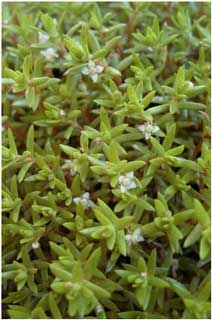 Crassula helmsii (New Zealand Pigmy-weed) appears not to be spreading at a great rate through the county but some worrying populations have been reported recently. Plants in a pond on the flood plain of the Afon Taf within reach of both flood and tidal waters at Llyn-y-gors, near St Clears (SN272152) were of great concern to the owner of the farm, Mrs Fiona Lanc, who reported the problem on 15/1/00. She was concerned over the threat to other waterbodies in the vicinity, should flooding or tidal inundation occur. A large, flowering population of C. helmsii was found during the Annual Recording Meeting in June 2000 to be smothering an ornamental pond at Glynhir (SN639150). Myriophyllum aquaticum covered a similar area within the same pond, so much so that there was no open water to be seen. More worrying was the fact that M aquaticum was present in another pond on the estate located adjacent to the Afon Llwchwr, from where it could easily colonise riparian habitats downstream. Perhaps the most potentially damaging C. helmsii population is that by the jetty in the Witchett Pool, Laugharne Burrows (SN2707), first observed in 1997 but it was found not to have increased when the site was visited by BSBI members on 25/6/00.
The Heracleum mantegazzianum (Giant Hogweed) which had been observed by the side of the A484 road at Trostre (SS533994) was last seen by Barry Stewart in April 1998 but three or four plants were found by ChC & MG at a new site near Llanllwni (SN482384) on 20/6/99. The long-established population along the side of the A40 near Manordeilo continues to move around, with T&VL recording several plants on 29/5/00 on the south side of the road at SN670261, a hundred or so m from the last recorded observation (GH, 30/6/88).
A batch of Cotoneaster specimens collected over the last few years was determined at NMW by GH in March 1999 and included the following new 10km square records (all plants believed to be self-sown):
- C. bullatus Llannon, SN5409, GH, 21/4/92,
- C. integrifolius Brynamman, SN708143, RDP, 16/7/93,
- C. simonsii Llanybydder, SN5242, GH, 4/7/91,
- C. sternianus Ammanford, on colliery spoil, SN620132, GH & RDP, 15/6/98,
- C. frigidus Kidwelly sewage works hedge, SN399063, GH & RDP, 31/8/91
- C. dielsianus Tanerdy, Carmarthen, SN4221, GH, 24/6/94 - St Anthony’s Well, Llansteffan, SN346098, IKM, 30/9/93.
Other Cotoneaster material included that collected by J&MI from the Gwili Railway terminus at Bronwydd Arms (SN418236) in August 1997 which was determined by GH as C. bullatus and C. sternianus. Both were also new 10km square records.
IKM has monitored an expanding patch of Allium triquetrum (Three-cornered Garlic) in front of offices at North Dock, Llanelli (SS497998) since he first noted it on 4/4/98. He also noted Oxalis exilis (Least Yellow-sorrel) at the base of a mortared wall at Heol Waun-y-clun, Trimsaran (SN452039, 23/10/98, second v.c. record); Oxalis incarnata (Pale Pink-sorrel) on a roadside bank at Pen-y-fai Lane (SN497016, 21/5/97, det. GH, known here for c.20 years) and self-sown seedlings of Alnus cordata (Italian Alder) at several sites: a garden at Coronation Road, Llanelli (SS513999) which it reached from trees at least 300m away, old sidings east of the railway station near Langland Road, Llanelli (SS512993) and at Cynheidre (SN492082). Another record of a self-establishing tree is Ficus carica (Fig), two small plants of which (c.30cm tall) were noted by IKM on 30/10/99 at Machynys (SS509983). The Ficus tree at Christian Temple graveyard, Ammanford (SN631123), first recorded by Annie Mary Pell in 1985, was still present on 1/1/2000 despite continued tidying of the ground (T&VL).
RNS and IKM discovered a profusion of Sedum sexangulare (Tasteless Stonecrop) alongside the access road to the Great Mountain Colliery site, Tumble (SN536125) on 28/4/98, and a single plant of Lactuca serriola (Prickly Lettuce) found by IKM growing at the base of a wall near Station Road, Llanelli (SS507998) was only the second recent v.c. record (7/6/99).
A large stand (c.50m x 2m) of Calamagrostis epigejos (Wood Small-reed) was discovered adjacent to the railway line south-west of Llangennech Station (SN563011) by RDP, KAC & C A Cottingham on 26/4/99, which is probably the same population recorded by Mrs Vaughan from Llangennech over twenty years ago. A new population was discovered by RDP on the Blackwells development site at Dafen (SN537019) in semi-improved, damp, rushy grassland on 16/9/00, the fifth v.c. record.
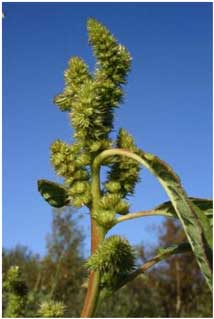 Several small patches of Cynodon dactylon (Bermuda Grass) were noted by Eric Clement and Paul Stanley on grass verges in a housing estate (SN45150055) and abundantly around the swings in a nearby children’s playground (SN44950060) in Burry Port when they visited the area in May 2000. This was a new record for the v.c. but when RDP tried to re-find the plants in June he found that the whole area had been recently mown and none were to be seen. RDP & KAC made the first v.c. record of Lagurus ovatus (Hare’s-tail), a single plant growing in the gravely forecourt of a house in Station Road, Llangennech (SN562015) in June 2000. IKM recorded Setaria viridis (Green Bristle-grass) growing in the back lane of Coronation Road, Llanelli (SS514999) on 26/9/99 and GH & IKM, recorded the same species at Adulam Chapelyard, Felinfoel (SN516022) on 8/9/00, where the population of Misopates orontium continues to survive with widely scattered flowering plants growing between the graves. These were the fourth and fifth v.c. records for Setaria vridis.
Another Setaria viridis plant was discovered by IKM on the shingle at the lake edge at Sandy Water Park (SN497003, 10/9/00) growing with Echinochloa crus-galli (Cockspur) and Linum usitatissimum (Flax). Another casual rare in Carmarthenshire, also discovered by IKM (12/9/00), was Amaranthus hybridus (Green Amaranth) (prov. det. GH) growing on recently bulldozed ground, south-west of Ty Mawr farm, Pembrey (SN418029) with Viola tricolor ssp. tricolor (Wild Pansy), also infrequent in the v.c.
Several plants of Phacelia tanacetifolia (Phacelia) were discovered by Paul Day growing by the gents at Burry Port Harbour during the break for lunch at the BSBI Welsh AGM field meeting on 21/8/00. This was a first v.c. record. No sign of any plants was seen during searches on various dates by RDP and KAC in 2000.Landscape architects continue to specify inappropriate plants for new schemes in the county. Salix cinerea ssp. cinerea (Grey Willow) has been introduced in place of locally native ssp. oleifolia in plantings at the new Millennium Wetlands extension to the Wildfowl and Wetlands centre at Penclacwydd (SS535985, IKM, 23/9/98) and at Sandy Water Park (SN4900, IKM, 1999).
An alarming number of instances of plantings of Hippophae rhamnoides (Sea Buckthorn) have also come to light in schemes associated with the Llanelli Millennium Coastal Park. The threat that this plant poses to coastal habitats can be demonstrated only too well at the dune systems of Pembrey, Tywyn Burrows, Laugharne and Pendine, as well as across the Burry Inlet at Whiteford on Gower. The species was introduced by the Forestry Commission in the 1920s and 1930s to stabilize the dunes during the planting of Pembrey Forest. At all these sites, Hippophae originating from these Pembrey plantings, has aggressively smothered the dunes, causing extensive swathes of irreversible habitat loss and exterminating all of the more delicate native species. Carmarthenshire County Council has recently embarked on an expensive programme of reducing the amount of Hippophae at their Pembrey Saltings Local Nature Reserve but elsewhere they are allowing it to be planted as part of their own landscaping schemes! And despite advice to the contrary, the species is still being specified for coastal planting schemes located close to very sensitive and valuable dune systems all along the South Wales coast.
 More insidious, perhaps, is the discovery of the Eastern European genotype of Lotus corniculatus (Common Bird’s-foot Trefoil), L. corniculatus var. sativus, at several reclamation and development sites recently. These include Glyn-Glas restored opencast site, Llandybie (SN607140, RDP, 7/98), a development site at Capel Hendre (SN597107, RDP & KAC, 29/6/00) and Penybanc near Tycroes (SN615114, IKM, 6/00) on old coal spoil tip.
Flora Production and the Future
GH continues with the back-room tasks of collating the bibliography and all first county records for inclusion in the forthcoming Flora, as well as receiving and dealing with material for passing to referees. He, of course, determines the majority of specimens that are sent to him and it is only critical material which get sent to higher authority. To him I continue to be very grateful. The volume of records now collected is sufficient to produce meaningful distribution maps for most species, although some deficiencies remain. I am particularly grateful to J&MI for taking the initiative to fill-in gaps for common species in their part of the county and in enlisting support of others through the local newspaper. The production of the county Rare Plant Register (Pryce, 1999b) has enabled the collation of records for a significant proportion of species and has provided a trial for the way the task might be tackled when writing the final work.
Further recording continues and the annual meetings will continue to be arranged because, apart from the new records they produce, they are generally acknowledged as being so enjoyable (and educational) by the participants. The emphasis, whilst still very much aimed towards recording under-worked areas, is increasingly biased towards monitoring sensitive species and re-finding populations which have not been seen for many years. Comprehensive site recording during Llanelli Naturalists’ and Wildlife Trust meetings is also a potential source of records and, whilst many meetings continue to be led as a ‘jolly’ for members, an increasing number are productive. The Rare Plants Register catalogues many species in need of monitoring. Genista anglica (Petty-whin), G tinctoria (Dyer’s-greenweed), Sibthorpia, Trollius and Vicia orobus continue to need general monitoring, but also populations of more common species away from their main population ranges, such as the lowland populations of Drosera rotundifolia or Wahlenbergia hederacea, might also be worthy of attention.
There is still a great deal of work to be done, most of which, I feel, is resting on my shoulders! With good luck, I hope that the Flora will reach production stage in the not too distant future.
References
Barker, T.W. (1905). Handbook to the Natural History of Carmarthenshire. W. Spurrell & Son, Carmarthen.
Chater, A.O. and Pryce, R.D. (1999). Overlooking Sibthorpia. BSBI Welsh Bul. 66: 15.
Cottingham, K.A. (2000). Field Meeting Report: Lower Lliedi Reservoir 29th April 2000. Llanelli Nats. Newsl. 66: 8.
Cottingham, K.A. (2000b). Field Meeting Report: Ffrwd Fen 17th June 2000. Llanelli Nats. Newsl. 66: 9.
Cottingham, K.A. (2000c). Field Meeting Report: Waun Gwiail-fach, Four Roads, 28th May 2000. Llanelli Nats. Newsl. 66: 10.
Dillwyn, L.W. (1848). Materials for a Fauna and Flora of Swansea and the Neighbourhood. Unpublished.
Ellis, R.G. (1983). Flowering Plants of Wales. National Museum of Wales, Cardiff.
Ellis, R.G. (2000). Welsh Plant Records: Carmarthen, v.c. 44. BSBI Welsh Bul. 67: 21.
Hutchinson, G. & Pryce, R.D. (2000). Field Meeting Report: Tywyn Burrows, 25 September 1999. Llanelli Nats. Newsl. 65: 11.
Lewis, T. (1999). Field Meeting Report: Waun Garreg, Llanedi, 19 July 1999. Llanelli Nats. Newsl. 64: 5.
Morgan, I.K. (1999). Great Escapes - some notes on garden plants growing wild around Llanelli. Llanelli Nats. Newsl. 64: 7.
Morgan, I.K. (2000a). Field Meeting Report: W.W.T. Penclacwydd 1 August 1999. Llanelli Nats. Newsl. 65: 10.
Morgan, I.K. (2000b). A tip about Tips and other Urban Botanical Tales for 2000. Llanelli Nats. Newsl. 66: 3.
Prosser, M.V. and Wallace, H.L. (1999). Burry Inlet and Loughor Estuary SSSI NV.C. Survey 1998. Unpubl. Rept. to Countryside Council for Wales.
Pryce, R.D. (1998). Carmarthenshire Flora: Progress Report 1995, 1996 and 1997. BSBI Welsh Bul. 63: 18-26.
Pryce, R.D. (1999a). Pwll Fly-ash Lagoon - Unique in Britain? Llanelli Nats. Newsl. 64: 6.
Pryce, R.D. (1999b). Carmarthenshire Rare Plant Register (January 1999 ed.). Unpubl.
Pryce, R.D. (2000a). Reports of Field Meetings – 1999: Carmarthen (v.c. 44) (In association with Welsh AGM) 20th– 22nd August. BSBI News. 82: 62-64.
Pryce, R.D. (2000b). Field Meeting Report: Tumble Community Woodland 17 July 1999. Llanelli Nats. Newsl. 65: 8.
Spalton, L. (1999). Bromus hordaceus L. ‘longipedicellatus’ ined. BSBI News. 81: 14-17.
Wilson, P. (2000). Species Action Plan for Deptford Pink, 2nd draft, 21st September 2000. Plantlife.